未来 (wèilái) — Future
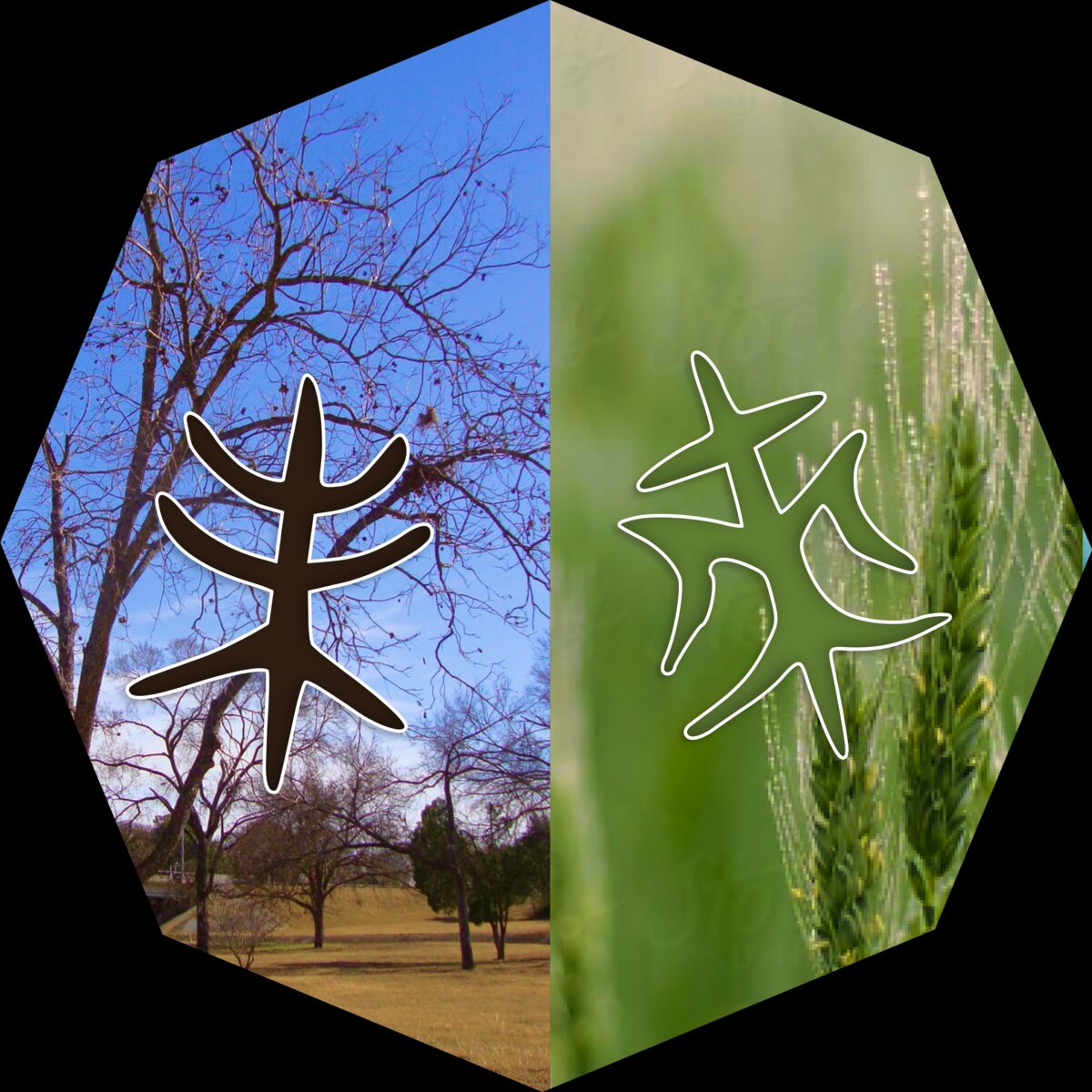
Experience how ancient Chinese combined a leafless tree (未 "not yet") with ripening wheat (來 "to come") to express the future. Discover the Sanskrit origins and the links between Chinese, Japanese (未来 mirai), and Korean (미래 mirae).
未来 (wèilái) means “Future”. "Not yet" (未) but "to come" (來) — a calque from Sanskrit.
The question
What do leafless trees and maturing wheat plants tell us about the future?
Etymology & history
Over 3,000 years ago, Chinese people wrote down the concept of "not yet" by drawing a tree with two layers of branches without any leaves. The leaves will come, just not yet... Another complex concept, which is the action "to come" could only be depicted by something we have all done before: wait for something. In this case, waiting for the crop of the season to mature. However some scholars suggest this connection to wheat may actually be a phonetic borrowing where the character was chosen because its pronunciation matched an existing word for "come" in Old Chinese. By taking the likeliness of a budding tree for "not yet" (未) and a maturing wheat plant for "to come" (來), and combining them together into one meaning of "not yet, but to come," Chinese people were able to express the concept of "the future" in writing.
Pronunciation across languages
Today, in Mandarin Chinese, we pronounce this word as "wèilái" (未来). The same word was adopted by Korean and Japanese as they began using Chinese characters to write their languages. So in Korean, we say "mi-re" (미래) and in Japanese, we say "mi-rai" (未来). Don't they sound similar? 未来: wèi lái, mi-re, mi-rai
Going deeper
I also wanted to mention that the origin of this word is a word-for-word borrowed translation (calque) from Sanskrit's "anāgata" which means: "not yet come." There are also more ways this meaning has been shared and rerepresented. For example, in Vietnamese, we can say "vị lai", and in some places like Taiwan and Hong Kong, we still say "wèilái", but use the traditional (未來) rather than the simplified (未来) version of the character when reading and writing.
Frequently asked questions about 未来
What does 未来 (wèilái) mean?
未来 (wèilái) means "Future". "Not yet" (未) but "to come" (來) — a calque from Sanskrit.
How do you pronounce 未来 in Mandarin Chinese?
Today, in Mandarin Chinese, we pronounce this word as "wèilái" (未来). The same word was adopted by Korean and Japanese as they began using Chinese characters to write their languages.
What is the origin and etymology of 未来?
Over 3,000 years ago, Chinese people wrote down the concept of "not yet" by drawing a tree with two layers of branches without any leaves. The leaves will come, just not yet... Another complex concept, which is the action "to come" could only be depicted by something we have all done before: wait for something.
Is 未来 used in Japanese and Korean as well?
Yes. 未来 originated in Chinese and also appears in Japanese (kanji) and Korean (hanja). Today, in Mandarin Chinese, we pronounce this word as "wèilái" (未来).
Speak Chinese, Japanese & Korean with TalkToDia
未来 is just the beginning. Practice real conversations with TalkToDia, your AI language tutor — available on iOS and Android.