世界 (shìjiè) — World
Explore the Buddhist origins of "world" — combining generation (世) with boundary (界). Journey from the Sanskrit lokadhātu through time (世) and space (界) to understand how this term came to mean our planet Earth.
世界 (shìjiè) means “World”. Generation (世) meets boundary (界) — from Buddhist texts.
The question
Is reality really just where we are, when we are?
Etymology & history
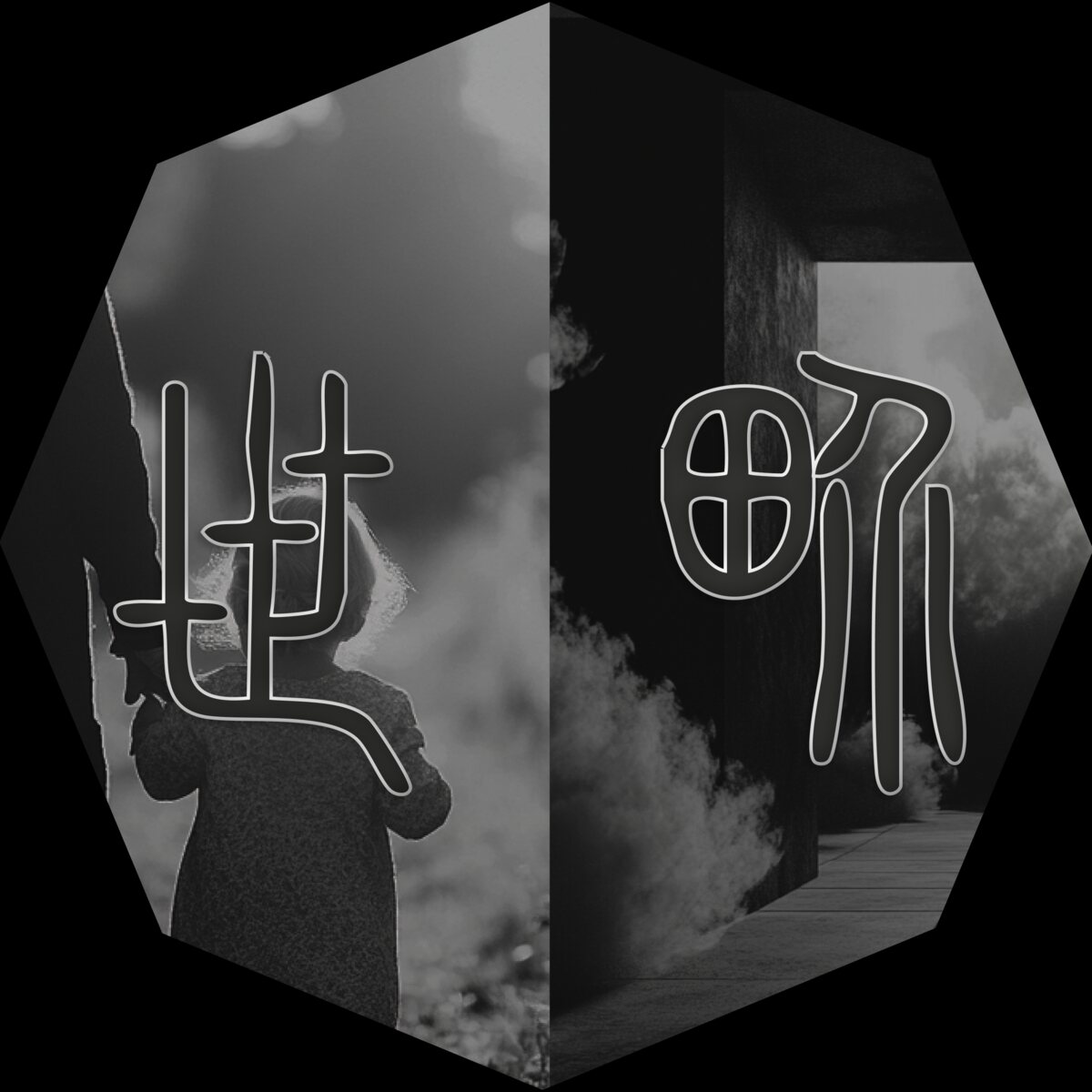
There are many words that mean something similar to “world” in Chinese. A commonly used one is 世界 (shìjiè), which means "the world". The character 世 (shì) is derived from a pictogram depicting three leaves on a branch, and now means generation or ancestry, which I find beautiful to see. 界 (jiè) is a phonetic-semantic compound, with the character for "field" (田) on the left and a phonetic component "jiè" (介) on the right, which means "to lie between". Today, this character comes to mean boundary or a bordered edge. Historically, shì (世) means "flow or progression" while jiè (界) refers to "direction or position". The term is borrowed from Buddhist scriptures written in Sanskrit, specifically the term lokadhātu (लोकधातु) where 世 refers to "time" while 界 refers to "space". The original Buddhist term referred to the entire universe, not just earth, thus 小世界, or "small world" was previously used to describe a minor world with a single sun and moon which compares to 三千大千世界 which means a universe containing a billion worlds. But today, it (世界) is used specifically to refer to our planet earth, though in the past, a different term, 天下, which means "under heaven" was used, though today, the term (世界) of Buddhist origin is used over it (天下), with much of the history now lost. Thus, combining the multiple generations of life with the boundaries of the world, this word comes to mean the world to people in East Asia.
Pronunciation across languages
Today in Mandarin Chinese, we pronounce this word as "shì jiè" (世界) and is now used to describe "the earth". Thus, you can find it in words like 世界地图, which means "world map". Koreans also use the word pronouncing it "se-gye" (세계) to mean "the world" in a more literal sense of "the (physical) earth", with another term, "se-sang" (세상), meaning "world" in a more figurative sense (over physical). In Japanese we pronounce it "se-kai", meaning "the world", "society" or "the universe". As they are all derived from the Chinese characters they sound quite similar in all three languages, don't they? shì jiè, se-gye, se-ka-i
Frequently asked questions about 世界
What does 世界 (shìjiè) mean?
世界 (shìjiè) means "World". Generation (世) meets boundary (界) — from Buddhist texts.
How do you pronounce 世界 in Mandarin Chinese?
Today in Mandarin Chinese, we pronounce this word as "shì jiè" (世界) and is now used to describe "the earth". Thus, you can find it in words like 世界地图, which means "world map".
What is the origin and etymology of 世界?
There are many words that mean something similar to “world” in Chinese. A commonly used one is 世界 (shìjiè), which means "the world". The character 世 (shì) is derived from a pictogram depicting three leaves on a branch, and now means generation or ancestry, which I find beautiful to see.
Is 世界 used in Japanese and Korean as well?
Yes. 世界 originated in Chinese and also appears in Japanese (kanji) and Korean (hanja). Today in Mandarin Chinese, we pronounce this word as "shì jiè" (世界) and is now used to describe "the earth".
Speak Chinese, Japanese & Korean with TalkToDia
世界 is just the beginning. Practice real conversations with TalkToDia, your AI language tutor — available on iOS and Android.